
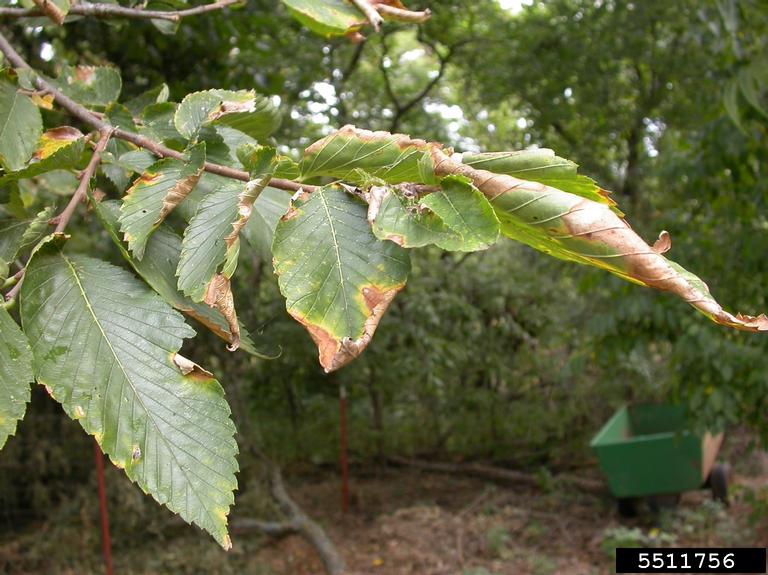
The disease, prevalent on parts of the European mainland could affect plants ranging from oak trees to roses.
And, an expert from the APHA has told letsrecycle.com that tighter passport controls for plants susceptible to the disease will be important in trying to keep it out of the UK. Plant species which have been confirmed as a host in the EU must now be accompanied by a Plant Passport, meaning they can only be moved by officially authorised businesses.
Speaking at the annual Organics Recycling Group conference yesterday (3 March) in Daventry, Mike Dennison, veterinary officer at the APHA told delegates: “There is a new plant disease in the news. It is quite possible this could have an effect in terms of composting which needs to be controlled.”
‘Know your enemy’
Mr Dennison told letsrecycle.com, that in terms of the challenge of Xylella, it was important to “know your enemy” and there was a need for “horizon scanning and more research and analysis”.
And, he said that as far as could be worked out so far, Xylella is “essentially a bacteria which would be sensitive to heat.” He added that this would mean that materials for composting, if infected or potentially infected, would have to be heat treated either in In-Vessel Composting or in an AD process.
Defra
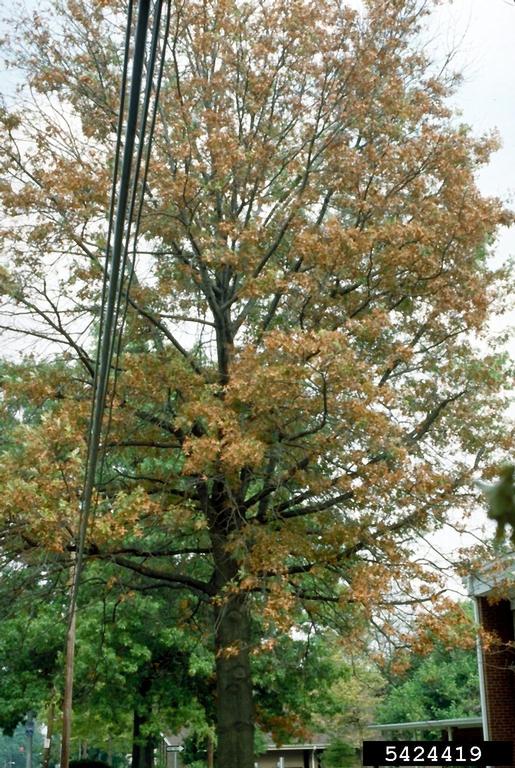
In a statement, the Department for Environment Food and Rural Affairs said: “Xylella fastidiosa is currently not present in the UK but we are taking action to protect against its introduction. In addition to restricting high-risk imports and inspecting other host material imported from outside the EU, we are also applying measures to prevent spread from areas of the EU where it is present.”
Officials explained that Xylella fastidiosa is a regulated pest in the EU under the Plant Health Directive which was recently strengthened in response to the risk posed by the organism. “This includes measures to protect against the introduction of the organism from countries outside the EU, as well as requirements to prevent infected material being moved from areas within the EU where it is present.”
Broad-leaved trees
Defra also says that “it is difficult to predict which UK plant hosts could be vulnerable to infection. Leaf scorches have caused significant harm to broad leaved trees in north east USA, especially to urban plantations of red oak species, Ulmus americana (American elm) and Platanus occidentalis (American sycamore). Some species of broadleaved trees may be vulnerable to the pathogen in the UK depending on the presence of vectors and climatic suitability.”
More information

Register for free to comment