




A WRAP-commissioned research project into reprocessing polypropylene plastics into food grade packaging has identified a number of “hurdles” that mean further work is needed to ensure it can become a commercially-viable process.
Discussing the findings of the research at PlasticEurope's Identiplast 2010 conference yesterday (November 9), Paul Davidson, head of sector specialists at WRAP, said that the project had helped uncover the potential for the market but also presented a number of issues.
“WRAP is committed to working with partners to achieve food grade PP. This has been technically challenging to date but I believe a huge amount has been learned that will benefit the industry going forward,” he said.
Mr Davidson added: “We always knew that this project would come up against hurdles, as it has never been attempted before. But the global benefits if we can crack it, and I believe we can, are huge.”
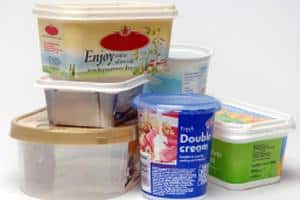
WRAP commissioned the research in April 2009 as a means of finding a viable outlet for PP material, such as pots, tubs and punnets. PP is the third most common polymer found in the average household waste stream after HDPE and PET (see letsrecycle.com story).
It said that, at present, the majority of PP is sent abroad for reprocessing due to “attractive export prices” and said there is little incentive for the material to be recycled into food grade packaging – as has happened with both PET and HDPE.
Project
The aims of the project were to develop a process to recycle PP into food grade packaging, which included testing whether the existing HDPE recycling process could be adapted for PP material. This was as well as identifying technical requirements for a successful food grade recycling process for PP and developing the steps necessary to achieve food grade status and producing food grade products.
Under European Food Safety Authority standards, recycled plastic has to meet stringent quality checks to be able to be used in food-contact packaging.
The study found that, while it had been possible to clean the PP for use in some food grade applications, improved cleaning for lower volatility contaminants would be required. Also, the work highlighted that better work would be needed to remove labels and ink in order to develop a successful food grade recycling process.
In the conclusion to its report on the project, WRAP states: “This study has provided valuable insight into the potential for using recycled PP in food grade packaging. It proved it is possible to produce recycled PP suitable for dry food applications but the trial material was not cleaned sufficiently to allow it to be used at 100% recycled content for liquid and full fat applications.”
WRAP will now be continuing the project into a second stage to assess cleaning heavy contaminants and investigating ink removal from PP packaging. The organisation claims that achieving these goals will lead to a “revolution” in PP recycling. Results are expected to be published in early spring 2011.

Subscribe for free