Fears raised over "limited" UK capacity to treat batteries
Tuesday 12 January 2010 Legislation News
Defra has acknowledged that sending waste portable batteries abroad due to the "limited" UK infrastructure for recycling could result in higher carbon emissions than if there were opportunities to recycle them domestically.
The comments came as it emerged that just four sites in the UK have been approved by the Environment Agency to treat waste portable batteries under the system of producer responsibility for battery recycling introduced this month. Much of theites' activities are expected to focus on sorting while the majority are expected to be exported for actual recycling.
![]() |
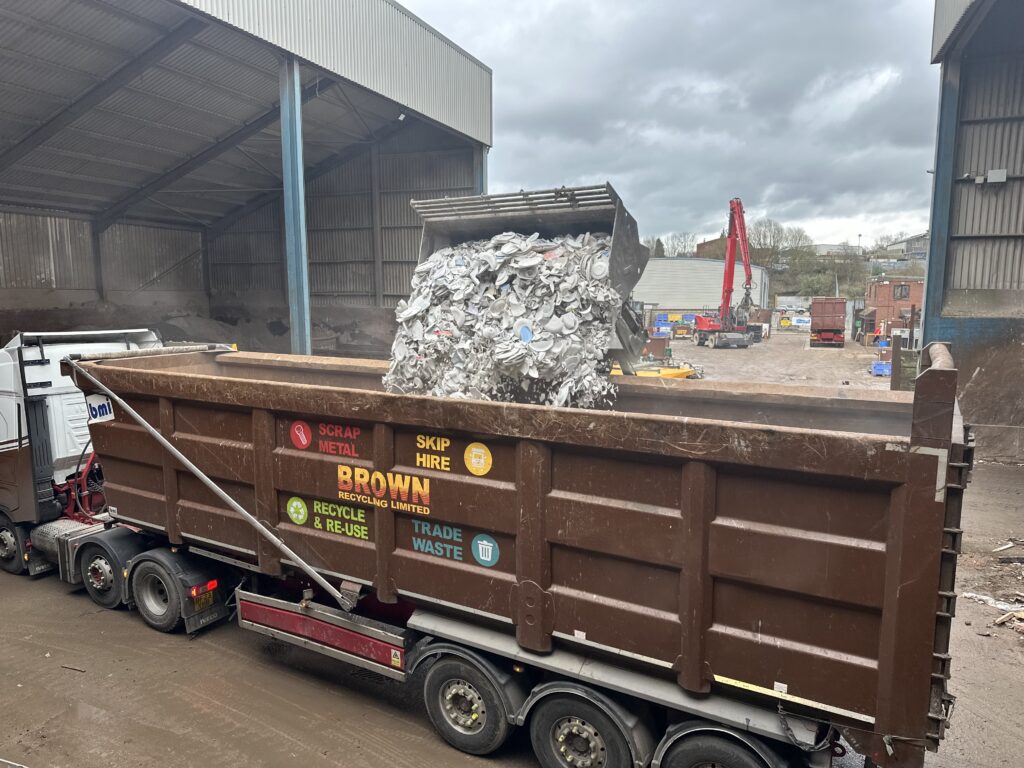
| G&P Batteries' facility in the West Midlands is one of just four to be approved to treat waste portable batteries in the UK |
A spokeswoman for Defra acknowledged that the UK infrastructure for recycling portable batteries was "currently limited".
"Sending batteries abroad for recycling could result in higher greenhouse gas emissions than would be the case if the batteries were recycled in the UK," she told letsrecycle.com.
It is estimated that around 60% of the UK's waste portable batteries will be treated overseas at facilities such as Citron SA's plant at Le Havre in the north of France, with alkaline manganese batteries, which represent the largest proportion of the UK market, generally being exported for treatment.
However, Defra stressed that recycling batteries would still save carbon emissions compared to sending them to landfill, and the spokeswoman added that "recycling also makes better use of natural resources by minimising the need to mine new materials."
And, speaking to letsrecycle.com, the batteries implementation project manager at the Environment Agency, Bob Mead, said he was not concerned about the fact that there were "relatively few" facilities sorting portable batteries in the UK.
With batteries compliance schemes already required to consider the carbon impact of the way they collect batteries, he said including a requirement to consider the carbon impact of treatment as well would have been "step too far".
He also explained that, with only 1,000 tonnes of portable batteries currently collected in the UK, and this figure only required to rise to 3,000 tonnes this year to meet the interim target of 10% set in the Batteries Regulations, "we never expected many treatment facilities for portable batteries in the UK until tonnages go up".
"The expectation has always been that the vast majority of these batteries would go abroad for recycling", he said. "The only question would be whether there was any pre-treatment before they go abroad and that's mostly going to be sorting."
And, he suggested that facilities being developed too early could impact on the cost of treatment if they were left operating at well below capacity.
Efficiencies
However, key figures in the sector said the current situation was a concern, and warned that the UK could "miss out" on the development of a dedicated battery recycling facility unless a decision was made soon on exactly what efficiencies treatment processes must achieve for a battery to count as recycled under the EU Batteries Directive.
Under the Directive, by September 26 2011 batteries must be being recycled to between 50% and 75% of their weight to qualify as being recycled "efficiently", but the European Commission is yet to issue a decision on exactly how these efficiencies should be calculated.
Michael Green, managing director for West Midlands-based battery recycling company G&P Batteries, said: "There's a question mark over the recycling efficiencies which is holding the development of any UK facilities back."
Approved treatment facilities
- G&P Batteries in Wednesbury, West Midlands
- HJ Enthoven in Matlock, Derbyshire
- Loddon Recycling near Alton, Hampshire
- Regenerisis PLC in Oxfordshire
"We need an answer soon because the potential is the UK might miss out," he explained. "If the European Committee set the recycling barrier too low so any cheaper furnace system can be used then I can't see plants being built in the UK, they'll just be shipped overseas because it's cheaper".
The importance of a decision was echoed by Mr Mead, who said: "It'll be the market that will decide whether it's going to be cost-effective, some of that will depend what the recycling efficiencies are going to be."
There have talk that the decision expected by the Commission on calculating efficiencies had been delayed, but Defra revealed that it expected the efficiencies to be published by March 2010, as planned.
"The UK has been actively participating in discussions with the European Commission and other Member states on the subject of recycling efficiencies, and expects, the Commission to prepare draft regulations before March as a result of the negotiations," the department spokeswoman said.
"Both Defra and the Department for Business, Innovation and Skills will be consulting with stakeholders when we receive these proposals with a view to getting the appropriate measures in place as soon as possible," she added.
Approved facilities
The four approved facilities for treating portable batteries are: G&P Batteries, in Wednesbury, in the West Midlands; H J Enthoven, in Matlock, Derbyshire; Loddon Recycling, who are based near Alton, in Hampshire; and, Regenerisis PLC, in Oxfordshire.
Of these, all except H J Enthoven are also approved exporters and will sort batteries before sending them overseas for reprocessing.
Duncan Simpson, director of marketing for battery compliance scheme Valpak, said the development of a full UK recycling facility was an "economic step".
He explained that currently batteries were either treated using pyrometallurgical processes - which use a furnace - or the more expensive hydrometallurgical processes - which use electrolysis.
"If the UK decided there was to be a higher recycling standard then hydrometallurgical would be the better solution, whereas both are acceptable at the moment," he added.
| The treatment facilities will have an important part to play in the UK system of producer responsibility for collecting, treating and recycling waste batteries, which came into force earlier this month |
He added: "It's inherent in any legislation or activity that you should have consideration of the impact that's going to be there when you collect, and that's why we have tried to piggyback onto existing collection routes."
However, he claimed that it was too early in the day to run a full assessment of the carbon impact of collecting, treating and recycling batteries.
"There are also many varying factors, we're trying to do it in the most cost effective, environmental way. If there's a change we can make in the future that can improve that then we will, but it's very complex, a thorough carbon assessment is a complex thing," he added.
Transport
Mr Green echoed Mr Simpson's sentiment that the carbon impact would be a consideration for all those involved in the system, but noted that it was not the "primary reason" for the legislation.
Related links
And, he added: "I would suspect the transport element of the carbon is a pretty small part of the impact," claiming any waste company that used its fleet efficiently would not add to the carbon impact of collections.
With recycling facilities in the north of France, Mr Green said: "Its 100 trucks or so in the scheme of things, they're going to do 50 or 100 miles more going overseas than if they stayed in the UK"
©2010 letsrecycle.com | Terms & Conditions | About Us | Useful Links