Royal approval for Bedfordshire anaerobic digester

Thursday 13 September 2007 Organics News

A Bedfordshire company gained a Royal seal of approval this week for its vision of developing a network of 100 new anaerobic digestion (AD) plants across the country.

Her Royal Highness Princess Anne made her enthusiasm for the project clear as she opened the first AD facility established by Biogen Ltd, part of the agriculture company Bedfordia, on Tuesday.

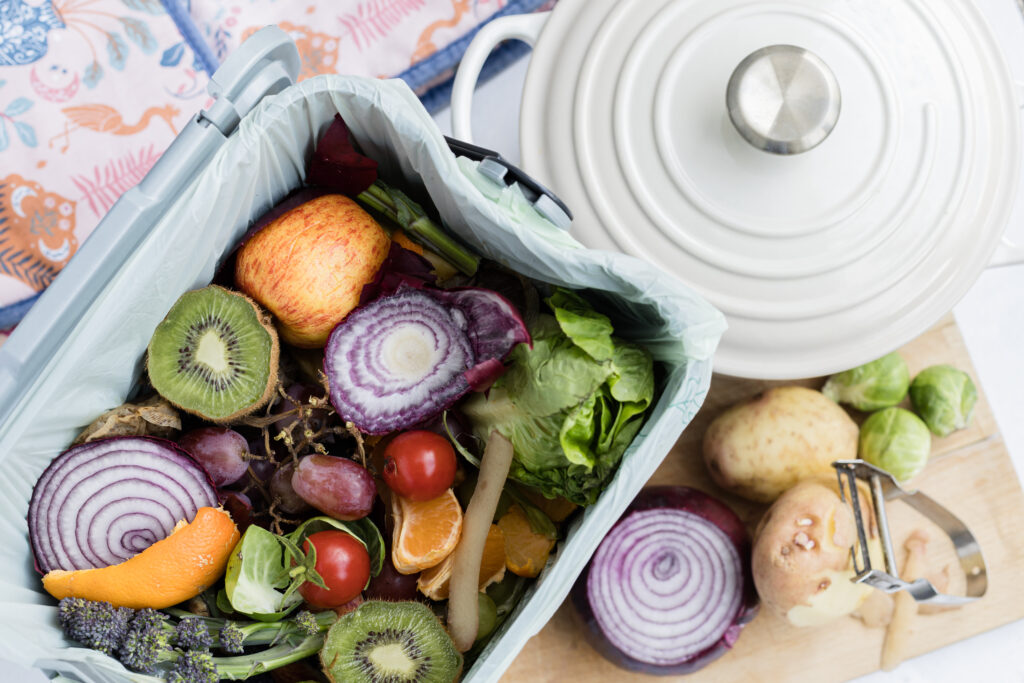
Her Royal Highness looks at a kitchen caddy as she visits the Twinwoods plant, pictured here with Biogen chairman John Ibbett (left) and technical development assistant Peter Ibbett (right)
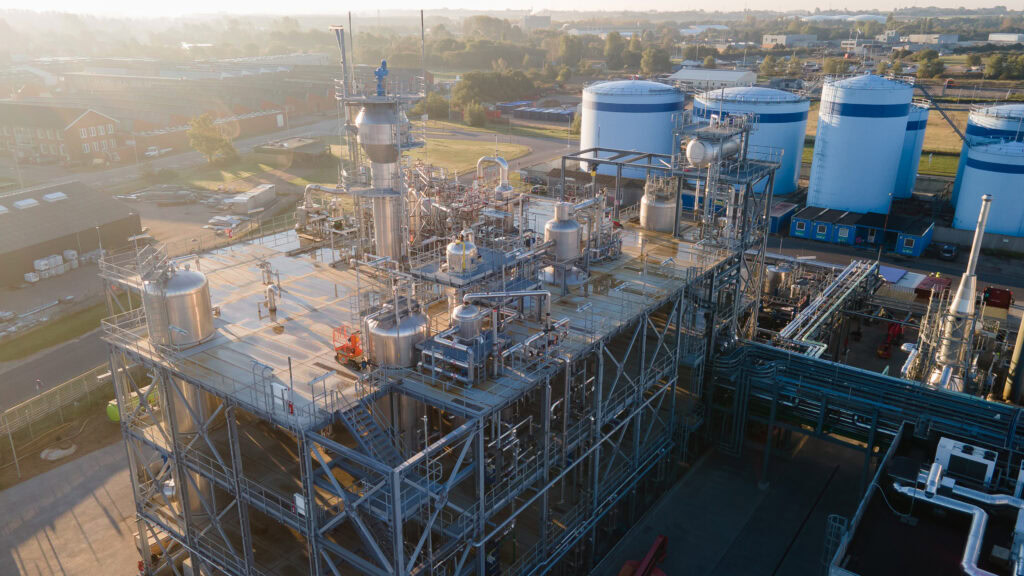
The multi-million pound facility at the old Twinwoods Airfield near Milton Earnest can process around 42,000 tonnes of organic waste and farm slurry each year, and is already taking in food waste from households in Bedfordshire, Milton Keynes and Luton.

The plant is to be the springboard for a series of similar plants run in partnership with other farmers or food producers, the company's chairman John Ibbett revealed at the opening.

The Princess Royal is well known for her interest in agriculture, and after touring the plant she made an impromptu speech to back the concept of generating energy from food waste and farm slurry through anaerobic digestion.

She said: "One of my pet whinges is what happens - or doesn't happen - to food waste. This is what is really necessary and it seems to work so well. Good luck in expanding this around the country - it does have such enormous potential for all of us."

Mr Ibbett revealed to the assembled dignitaries that his company has already submitted a planning application for a slightly larger plant in nearby South Northamptonshire. Bedfordia is also already in negotiations to develop 10 more plants, with the prospect of a 100-strong network now on the horizon.

Twinwoods

This is what is really necessary and it seems to work so well. 

 
HRH Princess Anne

The Twinwoods facility takes in food waste from commercial food producers through waste firm Cawleys, as well as material from food waste collection trials being run with Bedfordshire county council.

It also takes in about 12,000 tonnes a year of pig slurry from the breeding facility on Bedfordia's own farm - material that is transferred through underground pipes between the pig farm and the anaerobic digestor.

The plant is based on anaerobic digestion technology provided by German firm Welltech, with front-end processing systems developed by Biogen itself.

In the reception hall of the facility, liquid, solid or sludge material is ground up and subjected to a pasteurisation process - it is heated to 70 degrees centigrade for one hour. The facility even has the capability of taking in packaged goods to depackage and subject food waste to the AD process, and the company is in talks with supermarkets about the prospect of taking their food waste.

Once prepared, the organic waste is blended with pig slurry and kept in the anaerobic digestion tanks for, on average, 25 to 35 days, at a lower temperature of 40 degrees, where it is attacked by bacteria. The treated liquid is then stored in additional large tanks for use as a fertiliser on Bedfordia's own agricultural fields. Three times a year, about 37,000 tonnes of this biofertiliser is spread on 2,000 acres of land.

Energy

Biogas is collected in domes on top of the digestion tanks, to generate enough electricity to power 1,000 homes
The AD plant also generates a biogas - mostly methane - that is collected in domes above the digestion tanks to be burned to generate 1.1 MW of electricity for the national grid - the equivalent to power 1,000 homes.

Andrew Needham, managing director of Biogen, told letsrecycle.com that initially, the energy recovery had been almost an afterthought for the project, because electricity prices had been low during the early stages of its development.

"They have consequently shot up," he said, "so now it's an important part of the business model."

With the forthcoming Energy Bill set to double government subsidies for anaerobic digestion plants via the Renewable Obligation Certificates system, Mr Needham said energy production will be even more important part of his company's future AD projects.

One of the keys to the anaerobic digestion process is getting the right mix of different types of input material - the process operates best with a certain amount of nutrients like proteins. At Biogen, the consistent supply of pig slurry helps maintain the balance, but a range of contracts with food producers supplies other materials that are then mixed at the Twinwoods site.

Mr Needham said: "Consistency is important. We operate on portfolio theory - we have a number of contracts with lots of different people - so if you lose one of those contracts, it doesn't upset the balance."

Food waste trials

Bedfordshire county council is one of the key suppliers of material, through food waste collection trials supported by £35,000 in WRAP funding. Steve Watson, the council's development manager, said the scheme was based on a scheme run by Preston city council in Lancashire, using kitchen caddies and compostable bags for 6,000 homes in a semi-rural area.

The food collections are run by waste contractor Verdant on a weekly basis, alongside an alternate weekly residual waste and dry recyclables collection service, with a dedicated crew and vehicle for the food waste side.

Mr Watson told letsrecycle.com that the weekly frequency of the service, as well as the providing of plenty of information to householders, had been key to a successful service. A team of doorsteppers had managed to contact around 65% of households in the affected area, and he said participation in the trial scheme was now around 75%.

He revealed that using compostable bags had been a good way to make the service easy for householders to use.

"We are getting really good tonnages," he said. "It's the sanitary aspect of it all - people really appreciate getting the bags. Industry is now bringing down the cost of bags, and the more you buy, they are even cheaper."

  • BCR
  • Hawkvale
  • Prismm
  • Get Adobe Flash player
  • Get Adobe Flash player