Ruddock backs anaerobic digestion for food waste
Wednesday 17 October 2007 Organics News
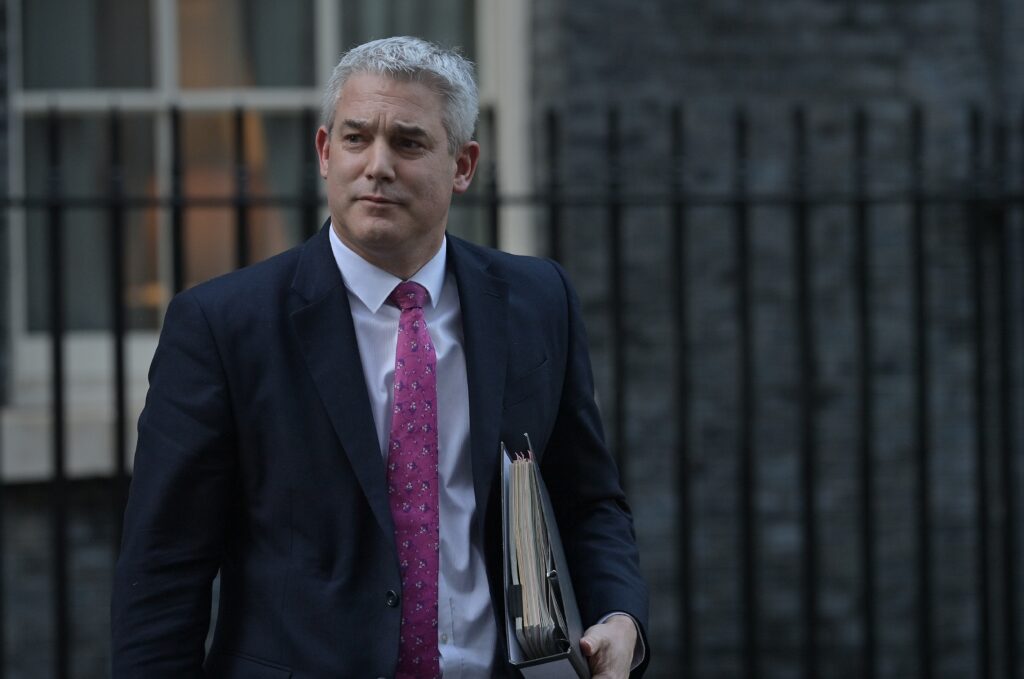
Minister Joan Ruddock has spoken of the forthcoming protocol for anaerobic digestion to be published next year, as she explained what is being done to bring more certainty for investors regarding the technology.
Mrs Ruddock was giving the key note speech yesterday at the Environmental Services Association conference on anaerobic digestion in Westminster.
When it comes to food waste, we do have a preference. AD is the best process to use.
Joan Ruddock
She revealed that "central government doesn't usually have a preference" when it came to waste treatment technologies, but said her Department considered anaerobic digestion as the "best process" for dealing with food waste.
However, the minister responsible for waste and recycling noted that as far as she knew, there were only three AD plants in the whole of the UK dealing with food waste on a commercial basis.
Anaerobic digestion involves the treatment of organic food waste by bacteria within controlled conditions, usually liquefied within tanks. The process generates a methane-rich biogas that can be used to generate electricity, as well as a liquid or solid digestate that can be used as a soil fertiliser.
Mrs Ruddock said yesterday: "When it comes to food waste, we do have a preference. Anaerobic digestion is the best process to use."
However, with plants in South Shropshire, the Western Isles and most recently Bedfordshire the only commercial AD facilities currently processing separately-collected food waste, the minister conceded more support was needed before the technology could be "proven".
She said: "Investors need certainty that the demand will be there for AD before investing. We know confidence needs to be built in quality and use of materials in the process."
Mrs Ruddock highlighted two major initiatives the government intended to help promote the use of anaerobic digestion. Firstly, the protocol being developed by the Environment Agency and WRAP, which could see digestate fertiliser reclassified as a "non-waste" if it meets certain standards (see letsrecycle.com story). At present, farmers using the digestate on fields must have a waste management licence or exemption in place.
The minister said the protocol should be published at some point next year.
The second initiative Mrs Ruddock said would provide additional support for anaerobic digestion was the government's Renewables Obligation Certificate scheme. Under the Energy Bill, this scheme is to double the current subsidies available for producers of renewable energy for energy generated via anaerobic digestion (see letsrecycle.com story).
PFI
![]() |
| Peter Jones of Biffa highlighted the Ribe AD plant in Denmark, which has been running for 15 years |
David Collins of the Renewable Energy Association, in particular, warned that councils seeking PFI funding would be tied up in long-term "inflexible" PFI contracts that would be "difficult to penetrate by emerging technologies like AD.
But Peter Jones, external affairs at Biffa Waste Services, which is already using a form of anaerobic digestion to deal with waste from the city of Leicester, said when the Landfill Tax and the Landfill Allowance Trading Scheme bring the economics of landfill more in-line with processes like AD, councils will find it easier to adopt the technology.
Mr Jones said: "PFI is a bar to the industry but those local authorities prepared to hang by their fingertips until 2014 will have plenty of choice. Companies will be out there with their technologies because they will know they can compete with landfill. PFI will be a totally irrelevant process by 2014."
Mr Jones noted that the rise of technologies like AD - as well as processes like gasification - would also be spurred on by the economics of the energy sector, as a number of coal and oil-powered power stations are set to close by 2015. New technologies will see a shift in how the waste industry generates revenue, from the "front door" - such as gate fees - to the "back door" - selling waste as a resource, for example as energy or compost, he added.
The Biffa director also suggested that the operators of AD plants will find costs are driven down if their plant is operating round-the-clock, so will be keen to source as much waste as possible.
"Opportunity"
Phillip Ward, director for local government services at WRAP, said anaerobic digestion provided an "excellent opportunity" for dealing with the 22 million tonnes of food waste generated in the UK each year, including the 6.7 million tonnes from households.
He linked the separate collection of food waste on a weekly basis with the increasing use of fortnightly residual waste collection schemes by local authorities, suggesting such a combination of collections maximised the capture of food waste.
Mr Ward said anaerobic digestion meant treatment costs of around £45 per tonne to £55 per tonne - slightly more expensive than in-vessel composting, which he said saw costs around £35-£45/t. By comparison, he said open-air composting of green waste costs were around £20-£25 per tonne, while home composting was the equivalent of £12-£14 per tonne.
Overall, the WRAP director said anaerobic digestion had a better environmental impact than both incineration and composting.
Related links
ESAWRAP is presently conducting a food waste collection trial with 16 local authorities and so far, it has reported participation rates of 60-80%, with very few incidents of contamination.
But in his presentation, Mr Ward also pointed out that AD shouldn't be used just for household food waste, he said businesses could build AD facilities on their sites, which could be used by local authorities and businesses alike.
©2010 letsrecycle.com | Terms & Conditions | About Us | Useful Links